What Are Fungi?
Fungi constitute a distinct kingdom of life, separate from plants, animals, and bacteria. With an estimated 2.2 to 3.8 million species [2], they represent one of the most diverse groups of organisms on Earth.
Key Points
- Fungi form their own kingdom, distinct from plants and animals
- They feed via absorption, not photosynthesis or ingestion
- Mycelium is the true body; the visible 'mushroom' is the reproductive organ
- Cell walls contain chitin, not cellulose
- Evolutionarily closer to animals than to plants
Neither Plant Nor Animal
Unlike plants, fungi cannot make their own food through photosynthesis—they lack chlorophyll. Unlike animals, they cannot ingest their food. Instead, fungi secrete enzymes to break down organic matter outside their bodies, then absorb the nutrients. This unique feeding strategy is called absorptive nutrition [3].
Fungal Structure
What we commonly call a "mushroom" is only the reproductive part (the fruiting body) of a much larger organism. The main body of the fungus consists of microscopic filaments called hyphae, which together form a network called mycelium. This mycelium can extend over vast areas—some individuals cover multiple hectares [1].
Cell Walls of Chitin
A distinctive feature of fungi is that their cell walls contain chitin, the same material found in insect exoskeletons. Plants, by contrast, have cell walls made of cellulose. This biochemical feature is one of many pieces of evidence that fungi are actually more closely related to animals than to plants from an evolutionary perspective [3].
Reproduction by Spores
Fungi primarily reproduce through spores—microscopic structures that can travel through air, water, or on animals. A single fruiting body can release billions of spores. Unlike plant seeds, spores do not contain an embryo or significant nutrient reserves.
Illustrated Concepts
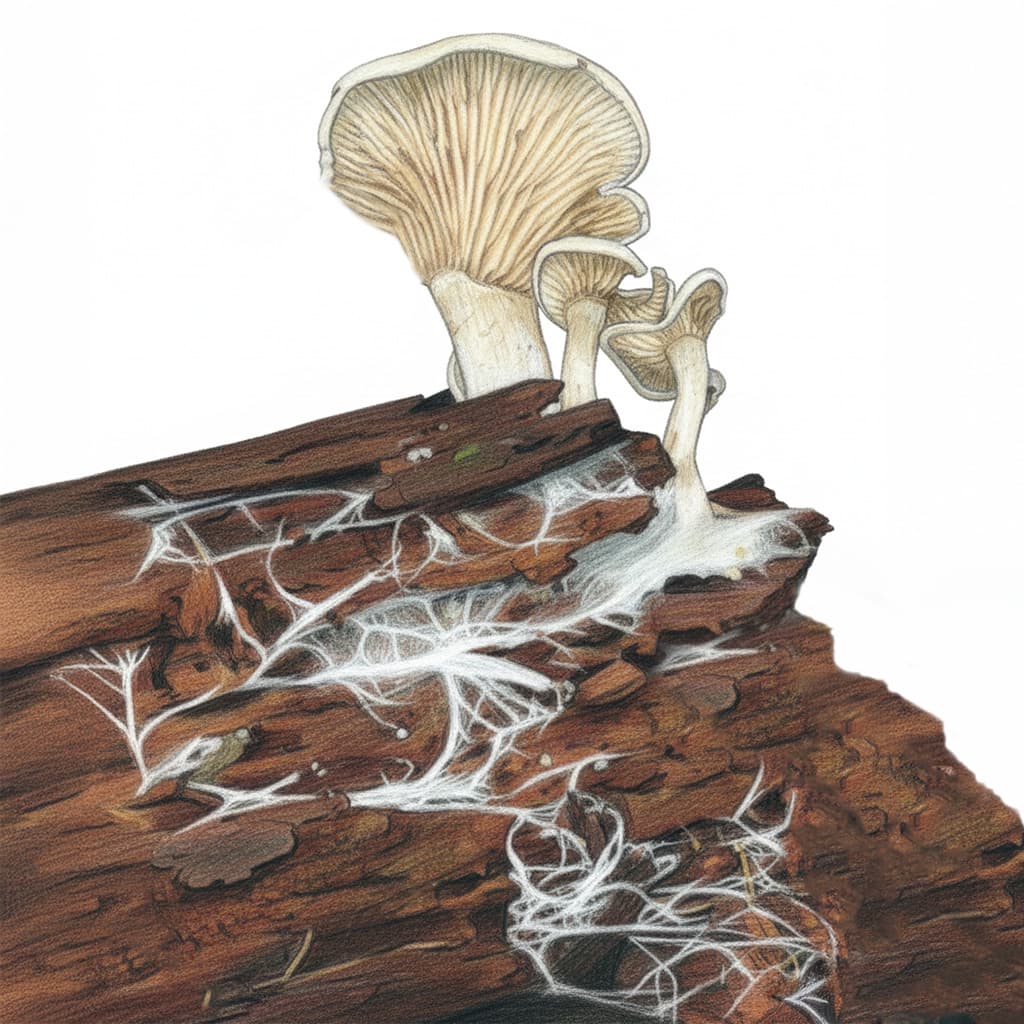
Mycelium
The underground network of filaments (hyphae) that makes up the main body of the fungus.
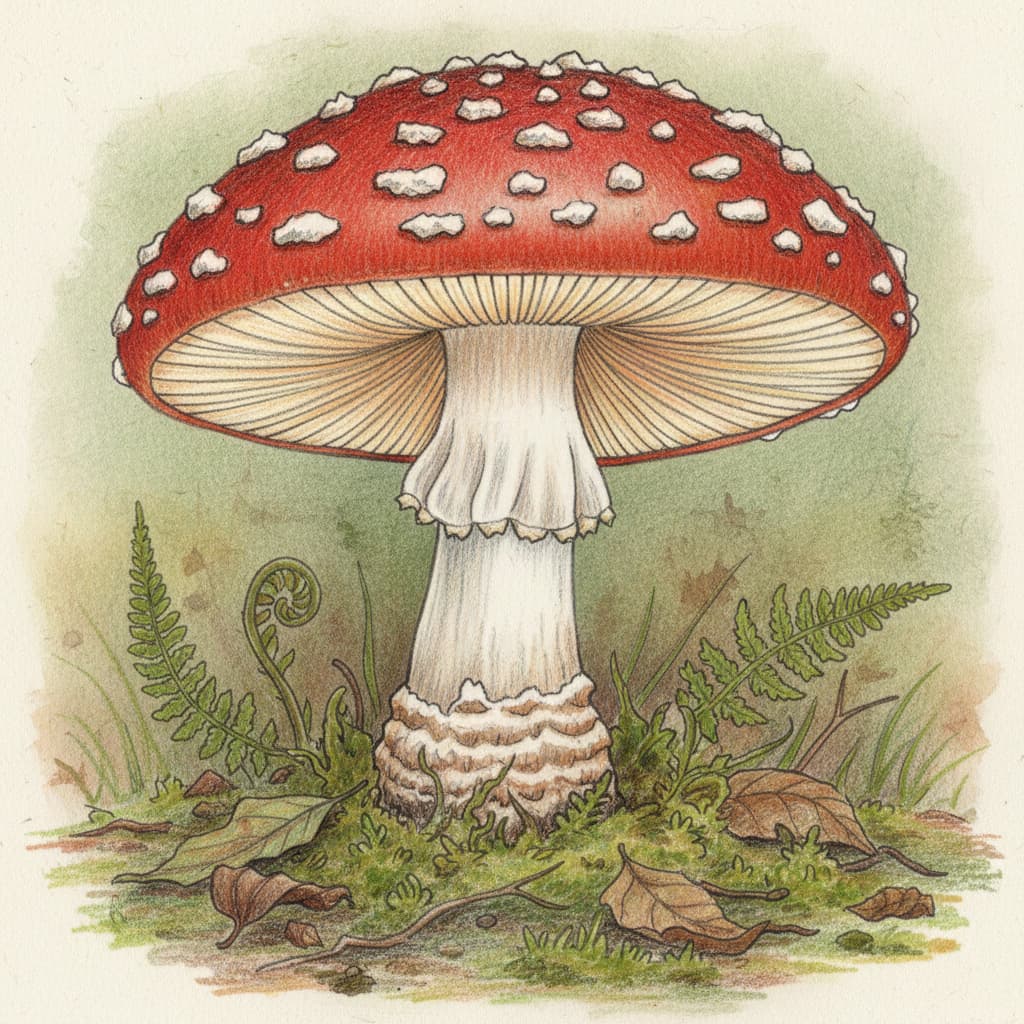
Fruiting Body
The visible reproductive structure, like this Fly Agaric mushroom.
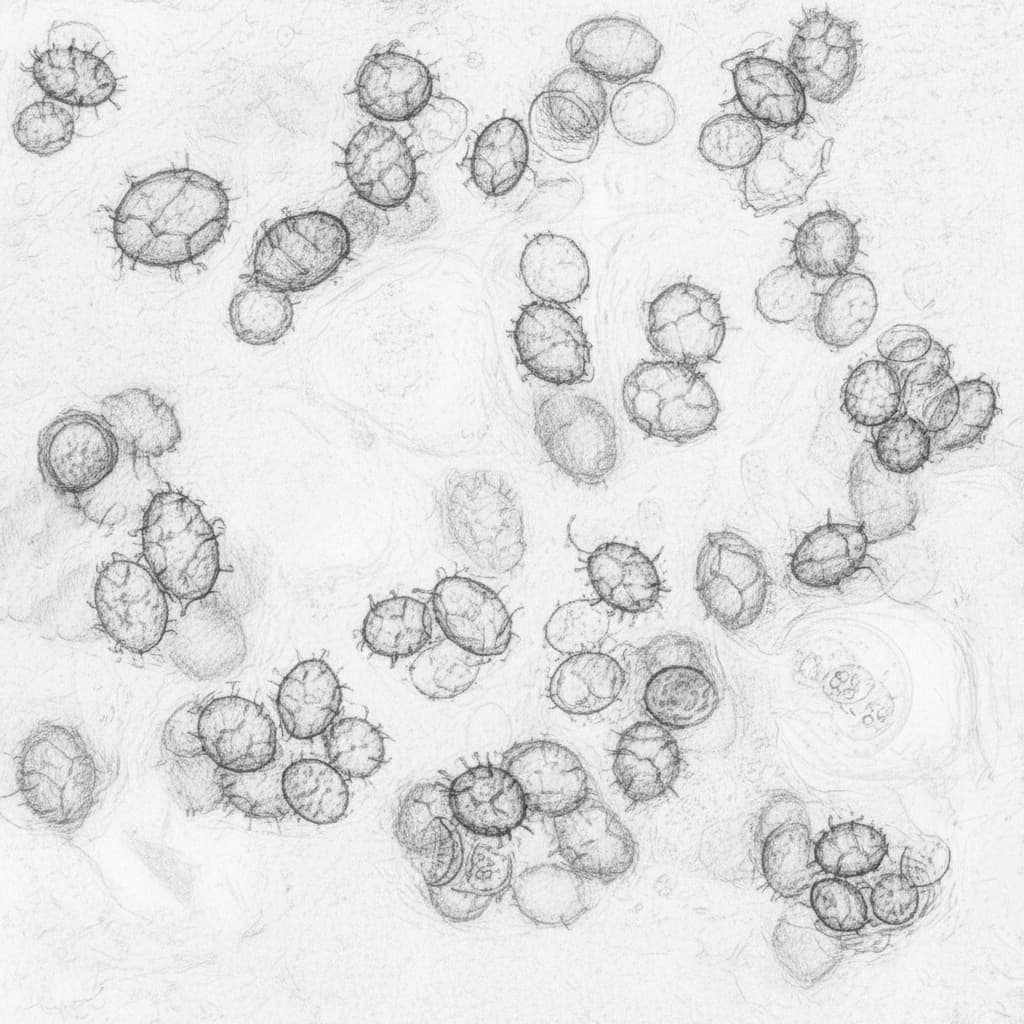
Spores under Microscope
Spores are the reproductive units of fungi, often invisible to the naked eye.
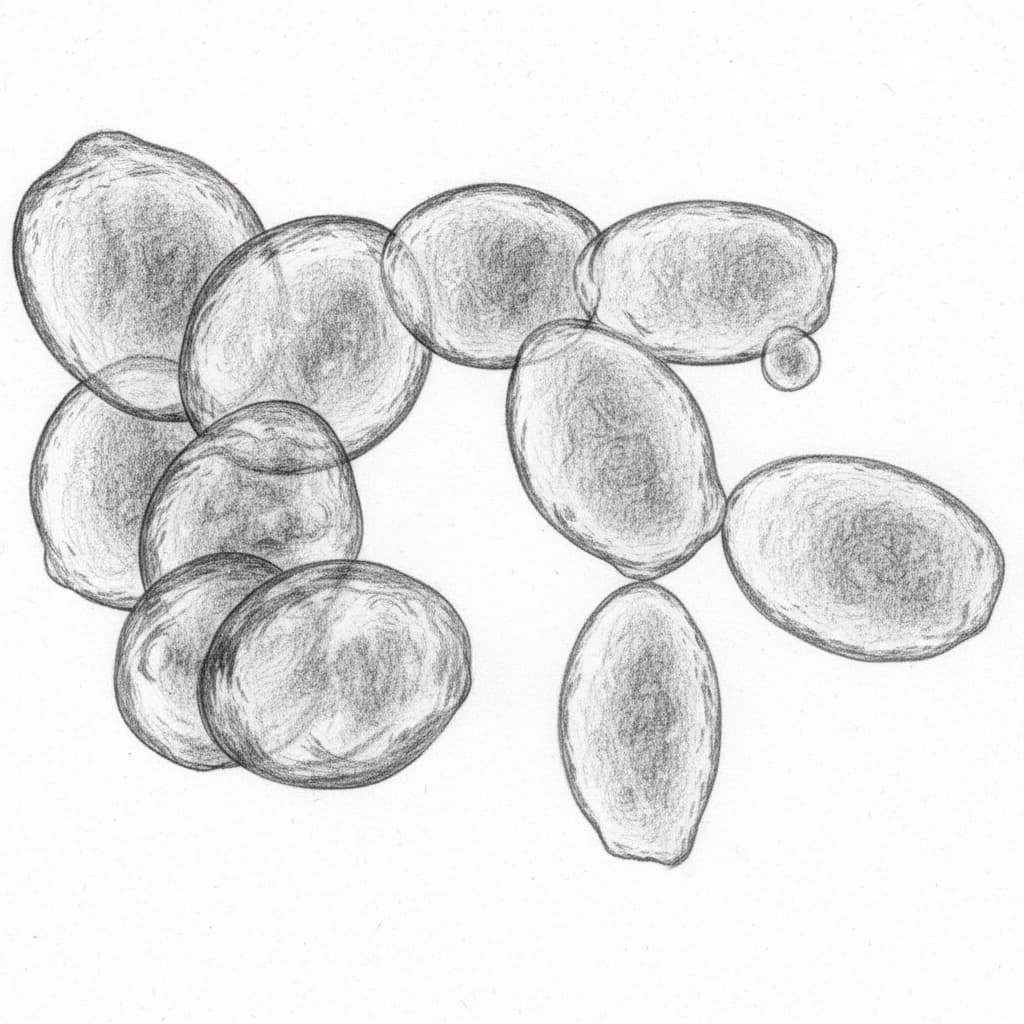
Yeasts
Some fungi are single-celled, such as the yeasts used in baking and brewing.