Decomposition and Nutrient Cycling
Without decomposer fungi, terrestrial ecosystems would collapse under the accumulation of dead organic matter. Saprotrophic fungi are the planet's primary recyclers, breaking down lignin and cellulose that few other organisms can digest.
Key Points
- Fungi are the only organisms that efficiently decompose lignin
- White rot recycles everything; brown rot leaves lignin behind
- Essential for the carbon cycle and humus formation
- Releases vital minerals for plant growth
Masters of Decay
Wood is composed primarily of cellulose and lignin—complex molecules that are extremely resistant to breakdown. Fungi are the only organisms capable of efficiently decomposing lignin on a large scale, using an arsenal of powerful enzymes (peroxidases).
White Rot vs. Brown Rot
Wood-decay fungi are divided into two main categories based on their chemical attack strategy:
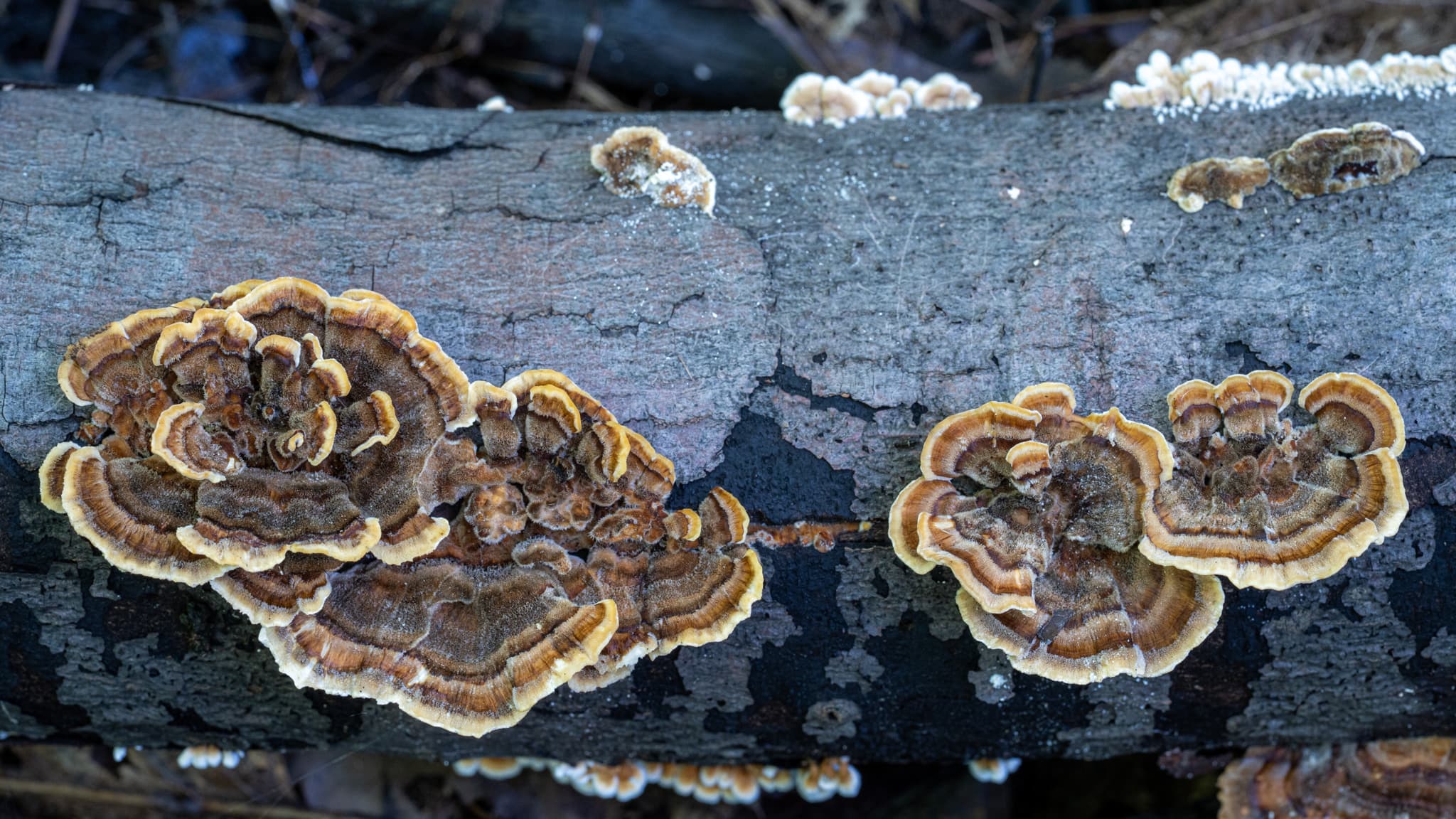
White Rot
Mechanism: Degrades both lignin AND cellulose.
Result: Leaves wood white, soft, and stringy.
Oyster mushrooms, Turkey Tail (*Trametes versicolor*).
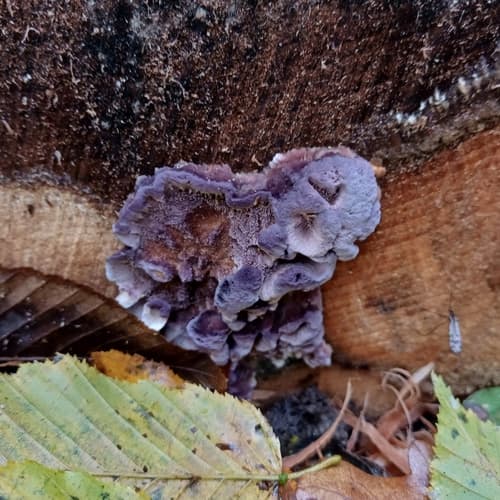
Brown Rot
Mechanism: Degrades cellulose but leaves lignin intact.
Result: Wood turns brown, cracks into cubes, and crumbles.
Red-belted Conk (*Fomitopsis pinicola*), Dry Rot.
Nutrient Cycling
By decomposing organic matter, fungi release trapped nutrients (nitrogen, phosphorus, potassium) into forms usable by plants. A single dead tree can feed a complex network of organisms for decades through this progressive decomposition.