Classification System
Mycology uses a hierarchical system to organize the immense diversity of fungi. This system helps us understand how different species are related through evolution.
Key Points
- Classification reflects evolutionary relationships
- The seven main ranks go from Kingdom down to Species
- Basidiomycetes and Ascomycetes are the two dominant groups
- Scientific names are universal
- Modern genetics (DNA) is constantly refining classification
The Taxonomic Hierarchy
Like all living things, fungi are classified into increasingly specific ranks. For a mushroom like the Fly Agaric (*Amanita muscaria*), the hierarchy looks like this:
| Kingdom | Fungi |
| Phylum | Basidiomycota |
| Class | Agaricomycetes |
| Order | Agaricales |
| Family | Amanitaceae |
| Genus | Amanita |
| Species | Amanita muscaria |
The Two Major Groups
The vast majority of fungi we encounter belong to two primary groups:
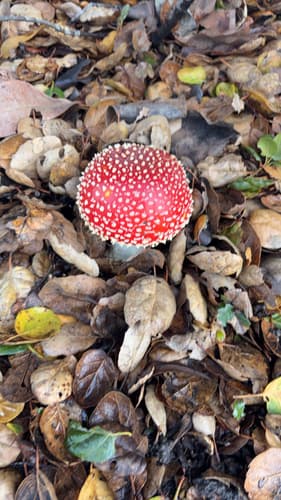
Basidiomycota
Includes most gilled mushrooms, bracket fungi, and puffballs. Spores are produced on club-shaped basidia.

Ascomycota
The largest group (morels, truffles, yeasts). Spores are produced inside sac-like structures called asci.
Why Do Names Change?
In the past, fungi were classified solely by their physical appearance. Today, DNA sequencing reveals hidden relationships. If DNA shows a fungus is more closely related to a different group, its name may be changed to reflect its true evolutionary history [2].